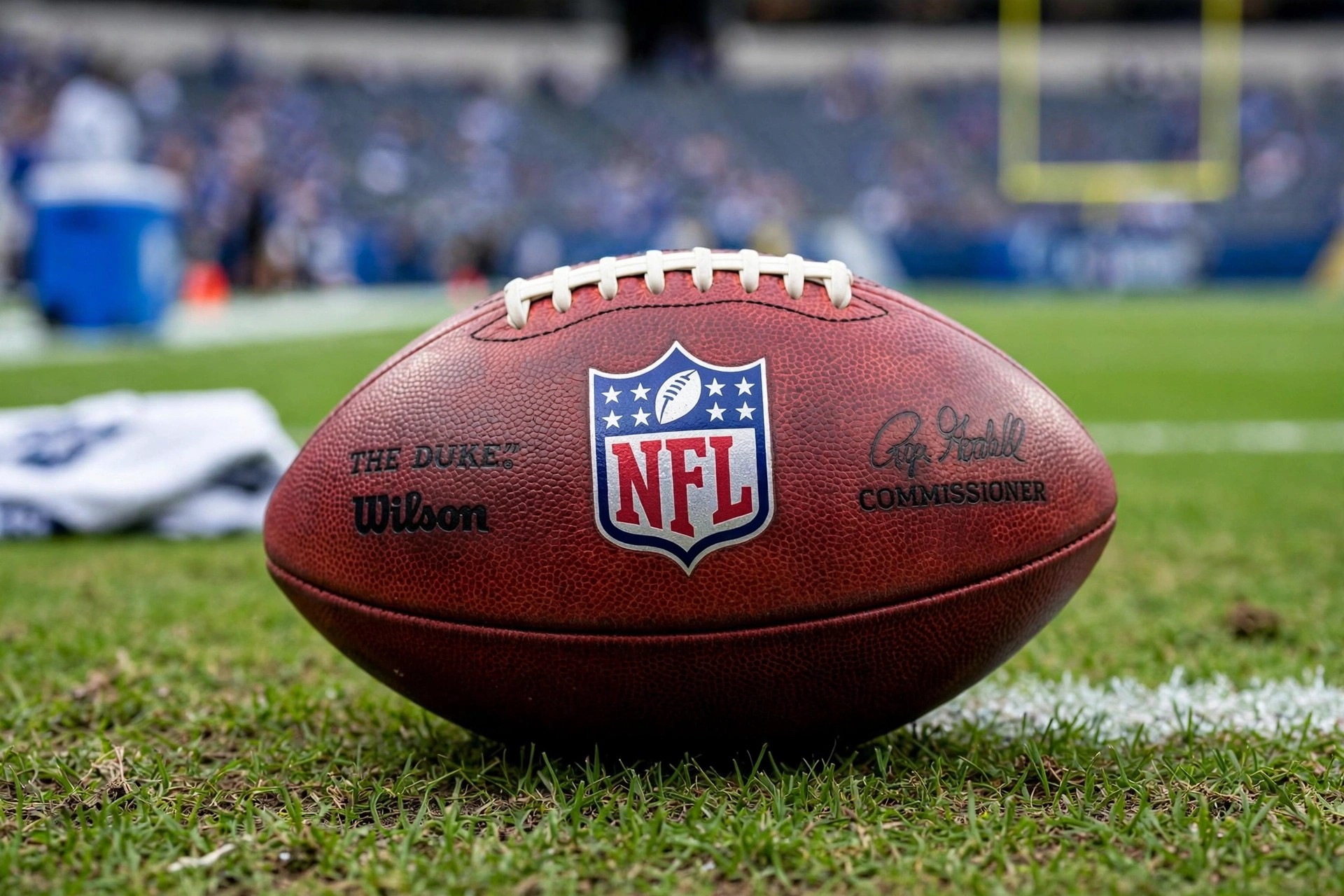

*Note: To aid in our explanations and for visualization purposes we will be using the National Football Conference (NFC), Philadelphia Eagles.
If you’re a new Philadelphia Eagles fan, NFL football can seem complicated. There are 11 players on each side, dozens of different formations, penalties, complicated terminology and a huge number of rules.
But underneath the noise of screaming Eagles fans and the sea of Midnight Green, the basic objective of NFL football is simple:
Score more points than the opposing team before the game clock hits zero.
Whether you’re watching the Eagles at Lincoln Financial Field or following them from home, understanding this one idea makes the rest of football much easier to follow. Everything that happens on a football field from running the ball, passing, tackling, blocking, kicking and playing defense is connected to that basic objective.
An Eagles Fan’s Guide to What Is the Basic Objective of an NFL Football

If you are the Philadelphia Eagles, the goal of every Eagles game is to finish with more points than the opposing team.
One team (the Philadelphia Eagles) has the ball and is on offense. The other team is on defense.
The Eagles offense is trying to move the football down the field and score.
The Eagles defense is trying to stop the offense from scoring and get the ball back for its own offense.
This creates the basic cycle of football:
Offense → tries to score → defense → tries to stop them → possession changes → other team gets its chance.

How Does a Team Score in the NFL?
There are several ways to score points in football.
Touchdown = 6 Points
The most common way to score a touchdown is for an offensive player to carry or catch the football in the opponent’s end zone.
For example, if a running back carries the ball across the goal line and into the end zone, the team scores a touchdown.
A quarterback can also throw a touchdown pass to a receiver, tight end or running back.
The offense can then attempt an additional scoring play after scoring the touchdown.
Extra Point = 1 Point
After a touchdown, the team, such as the Eagles, can attempt an extra point kick.
If the kick goes through the goalposts, the Eagles receive one additional point.
That means a touchdown followed by a successful extra point is worth 7 points total.
Two-Point Conversion = 2 Points
Instead of kicking an extra point, the Eagles could attempt to score another touchdown from a short distance (2 yard line).
If successful, the Eagles receive two additional points.
Therefore, a touchdown followed by a successful two-point conversion is worth 8 points total.
Field Goal = 3 Points
Philadelphia can also score by kicking the football through the opponent’s goalposts.
This is called a field goal and is worth three points.
Teams frequently attempt field goals when they have moved the ball into a position where they believe their kicker can successfully make the kick but do not believe they can easily score a touchdown.
For example: Philadelphia may move the ball into field goal range (usually inside the 50 yard line) but fail to convert a third down. Rather than leave the possession without points, the Eagles may send their kicker onto the field.
If the kick is successful: Eagles field goal = 3 points
Safety = 2 Points
A safety is a rare defensive score awarded when the defense tackles an offensive player inside their own end zone. The defense receives the two points, and possession changes afterward.
For example: If the Eagles pass rush tackles an opposing quarterback in his own end zone, Philadelphia gets 2 points and receives the ball right back.
What Is the Offense Trying to Do?
The offense has one main job: Move the football down the field and score points.
The offense has a couple of ways to accomplish this objective. They can run or pass the football.
They use a combination of running and passing to keep the defense from knowing exactly what is coming.
The offense is led by the quarterback, who typically receives the snap from the Center and generally either hands the ball to a runner or throws it to a receiver.
Important offensive positions include:
- Running back (RB): Primarily runs with the football and can also catch passes.
- Wide receiver (WR): Runs routes and catches passes.
- Tight end (TE): Can catch passes and block.
- Offensive line: Blocks for the quarterback and running game.
The offense is not simply trying to gain as many yards as possible. The ultimate goal is to turn those yards into points. Whether by touchdowns or field goals.
What Is the Defense Trying to Do?
The defense has the opposite objective of the offense.
Their job: Stop the offense from scoring and get the football back.
The defense can accomplish this by tackling the ball carrier, stopping passes, forcing the offense to give up possession or creating turnovers.
Some of the most important defensive positions include:
- Defensive linemen: Try to stop the run and pressure the quarterback.
- Linebackers: Help defend against both running and passing plays.
- Cornerbacks: Primarily defend wide receivers.
- Safeties: Play deeper in the defense and help defend against passes and big plays.
Two especially important ways the defense can take the football away are an interception and a fumble recovery.
An interception occurs when a defensive player such as cornerback catches a pass intended for an offensive player such as a wide receiver.
A fumble occurs when an offensive player loses possession of the football and the defense recovers it.
Both can dramatically change a game. In fact, generally speaking, whoever wins the turnover battle tends to win the game.
What Are Downs in Football?
One of the most important concepts for a new football fan to understand is the down.
The offense gets four downs to gain 10 yards. If the offense gains at least 10 yards within those four downs, it receives a new set of four downs.
For example:
1st down & 10: The Eagles need 10 yards.
The Eagles run the ball. Philadelphia gains 4 yards.
2nd down & 6: Philadelphia now needs 6 more yards to get a first down.
Philadelphia passes the ball. The Eagles gained 3 yards.
3rd down & 3: The Eagles now need 3 more yards.
The Eagles pass the ball again, and Philadelphia gains 4 yards.
Because the Philadelphia Eagles gained at least 10 yards from where the previous set of downs began, it gets another first down. This process continues as the offense moves toward the opponent’s end zone.
What Happens If the Offense Doesn’t Gain 10 Yards?
If the offense fails to gain 10 yards after four downs, it normally turns the football over to the other team. However, teams usually don’t simply use all four downs without considering field position.
This is where the punt becomes important.
On fourth down, a team may choose to punt the football to force the opponent to start its possession farther away from the end zone.
A team may also attempt a field goal if it is close enough to the goalposts. Usually when the offense is on their side of the 50 yard line.
The decision depends on factors such as field position, score, time remaining and how many yards are needed.
Or the team can choose to go for the first down on fourth down and try to gain as many yards as they need to get the first down.
Why Is Field Position Important?
Football is not simply about scoring. Where a team has possession of the football can be extremely important.


Imagine the Eagles offense starts at its own 10-yard line. It has a long distance to travel before it can score.
Now imagine Philadelphia’s offense starts at the opponent’s 30-yard line after a turnover. The offense is already close to the end zone.
This is called field position, and it can have a major impact on what an offense and defense can do.
Good field position gives an offense a shorter distance to travel to score.
NFL Rivalries & Fan Culture
One of the most fun parts of football is the culture and rivalries. Understanding the objectives on the field is only half the battle; knowing who the Eagles are playing completes the picture.
- NFC East Battles: The games against the Dallas Cowboys, New York Giants, and Washington Commanders carry extra weight. Winning division games is the fastest route to securing a spot in the NFL Playoffs.
- Lincoln Financial Field: Known affectionately as “The Linc,” Philadelphia’s home field provides one of the most intense homefield advantages in professional sports.
- “Fly, Eagles Fly”: Philadelphia’s fight song is played every time the Eagles score a touchdown at home, 67,000+ fans sing the franchise’s iconic fight song in unison.
Once you understand this Eagles fan’s guide these concepts of the basic objective of NFL football starts making much more sense. You can then move on to understanding formations, schemes, penalties, blitzes, coverages, route concepts and other parts of the game.
Remember, you don’t need to learn everything at once.
The Bystander

Closely Observing the NFL